Archaeologists uncover ancient city wall in northeast Thailand

Archaeologists uncover ancient city wall in northeast Thailand
#breaking #ancienthistory #archeology
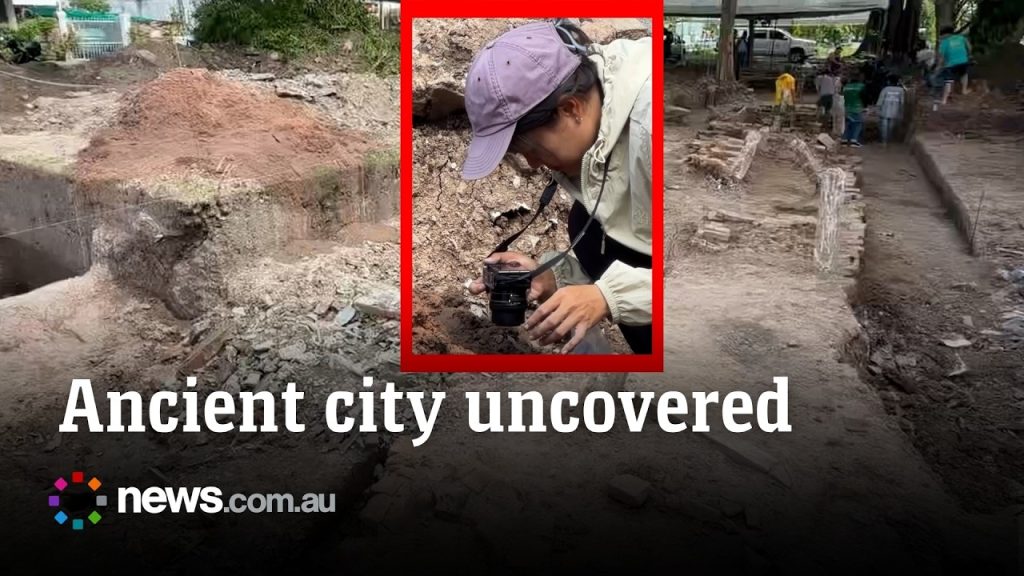
Archaeologists have uncovered a section of an ancient city wall in northeast Thailand, marking the first major discovery in more than 20 years.
The centuries-old wall was unearthed during excavations at the Phon Lan area in Nakhon Ratchasima.
Experts said the structure went undetected in a previous 2024 survey, adding that it is a significant find since research began in 1999 and was suspended in 2006.
The excavation was jointly led by the Fine Arts Department’s Regional Office 10 and Nakhon Ratchasima Municipality. It began on July 20 and will continue until August 8.
Archaeologist Wannapong Palakawong Na Ayudhya said on August 3 that the excavation also uncovered evidence of human habitation dating back between 1,500 and 2,500 years, including animal bones, pottery fragments, charcoal, ash, and shells.
He said: ‘The discoveries provide insight into daily life from the Bronze Age and Iron Age through to the period when written records began.
‘The city wall remains an important part of Korat’s heritage despite some soil layers having been damaged by past land use and waste dumping.
‘Samples of organic material found beneath the brick foundations, together with traces of rice husks within the bricks, will undergo scientific analysis to determine when the wall was constructed.’
Previous studies suggest the city wall enclosed a rectangular city measuring approximately 3.2 miles (5.2 kilometres) in length.
It was constructed from bricks laid on a compacted earth foundation, measuring about 8.5 feet (2.6 metres) wide and 13 feet (4 metres) high.
The city was surrounded by a moat and featured 15 fortresses, with gates positioned at each of the four cardinal directions.
On July 9, archaeologists discovered an ancient grave containing human skeletons, pottery and relics at the Mun Bon Dam in Nakhon Ratchasima after receding water exposed the remains.
Experts said the grave site dates back 1,500 to 2,500 years and could be the closest prehistoric burial site ever found near the Mun River.
▬▬▬▬▬▬▬▬▬▬▬▬▬▬▬▬▬▬▬▬▬▬▬▬▬▬▬
Connect With news.com.au Online ► [https://www.news.com.au] https://bit.ly/3WC8hOP
▬▬▬▬▬▬▬▬▬▬▬▬▬▬▬▬▬▬▬▬▬▬▬▬▬▬▬
Follow Us:
Facebook ► [https://www.facebook.com/news.com.au/]
Instagram ► [https://www.instagram.com/newscomauhq/?hl=en]
TikTok ► [@news.com.au]
X ► [https://twitter.com/newscomauHQ]
▬▬▬▬▬▬▬▬▬▬▬▬▬▬▬▬▬▬▬▬▬▬▬▬▬▬▬
Subscribe To Our YouTube Channel
For The Very Latest News From Australia And Around The World:
► [https://www.youtube.com/@newscomauhq]
► [https://www.youtube.com/@newscomauhq/shorts]
► [https://www.youtube.com/@newscomauhq/videos]
▬▬▬▬▬▬▬▬▬▬▬▬▬▬▬▬▬▬▬▬▬▬▬▬▬▬▬